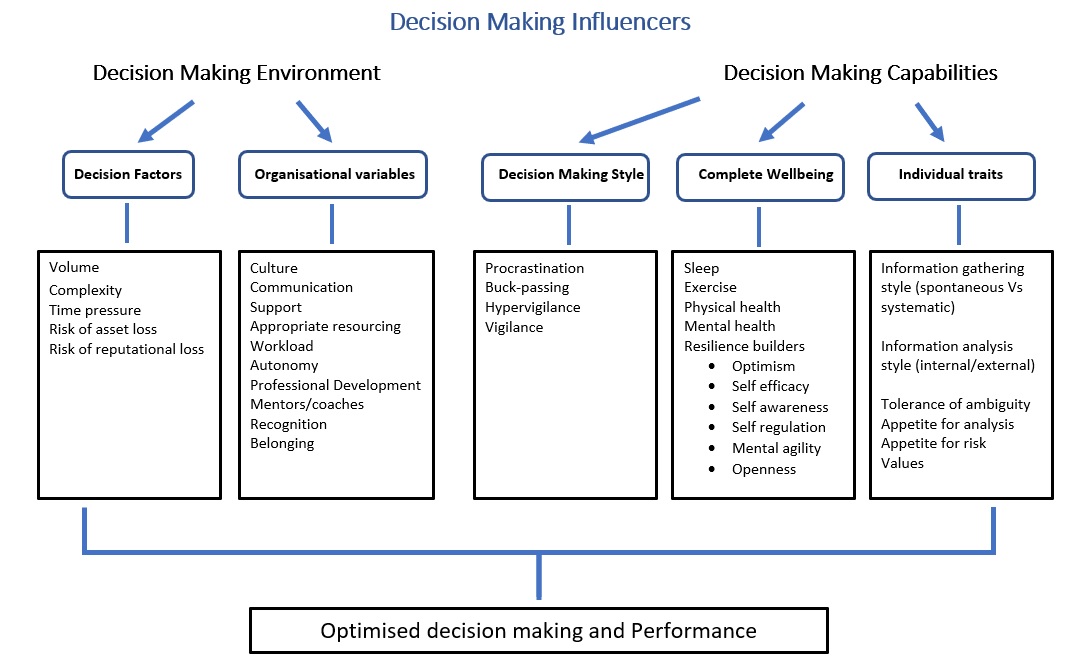
Decision making is a complex activity that is influenced by multiple factors, both internal and external to the individual making the decision. These factors are outlined in the diagram below:
(Hint: clicking on the graphic will enlarge it for improved clarity).
Our capability and capacity to sustain the performance of good decision making consistently, accurately and within required time frames is influenced by the degree to which we invest in our Complete Wellbeing behaviours.
A good decision-maker chooses actions that give the best outcome for themselves and others. They approach the process with an open mind and try not to allow their own biases to sway them. They allow sufficient time to research alternatives and understand the consequences.
Good decision-makers involve others when appropriate and use knowledge, data and opinions to shape their final decisions. They can logically explain their reasoning for choosing a particular option over another.
Anyone can be a good decision-maker. Making decisions is an integral part of any job, whether you are in an entry-level position or you make important choices on behalf of your company as an executive.
Principles of good decision making:
- Know your goals
- Collect information
- Consider all your options
- Imagine different scenarios
- Stay open-minded
- Eliminate options before making a final decision
- Understand some options have equal value
- Use your available time
- Embrace the consequences
- Learn from past decisions